copyright & zombies
Night of the Living Dead and the public domain
1968 was a tragic and tumultuous year. In January, we had one of the biggest and most contested engagements of the Vietnam War. By March, we had a large protest in a Los Angeles high school with students demanding a better education. In April, Martin Luther King, Jr., was assassinated, and two days after Valerie Solanas attempted to murder Andy Warhol, Robert F. Kennedy was shot at a hotel in Los Angeles.
By October, Americans had spent the better part of a year watching the horrors of the world unfold in real time, on television, in their living rooms. Nobody needed to imagine the horror and destruction, since they had the evening news. This is also the month that a low budget zombie film opened in a Pittsburgh theater, changing the horror genre forever, but also giving us copyright nerds something to talk about.
Hollywood and its problems
Movies had been struggling for most of the decade. Television was winning, and the studios kept swinging at it with big gestures. Spartacus arrived in 1960, Lawrence of Arabia in 1962, and Cleopatra in 1963. Cleopatra alone had a budget of ~$37 million dollars. These landmark movies were breathtaking, but studios struggled to balance the production costs and time to market with release revenue.
The other strategy was to make movies that television could not air. That meant sex, violence, and characters behaving badly. We had Bonnie and Clyde, The Graduate, and the early Bond films. Audiences were ready for a change, and the moral rulebook that had governed Hollywood since the 1930s, the Hays Code, was crumbling under the pressure. In 1968, the MPAA introduced a new rating system (G, M, R, and X) in an effort to balance what the audience was craving and what societal morals were fighting. This rating system took effect in November, with our topic of this story releasing on October 4th.
Enter our star of the show. George Romeros' landmark film, Night of the Living Dead. The film, that for its entire first run, had no rating, no age restriction, and no usher stopping anybody at the door. This meant that parents dropped children off at the Saturday matinees as they always had and those children got to watch the dead eat the living for 96 minutes.
A farmhouse, ten friends, and, a tiny budget
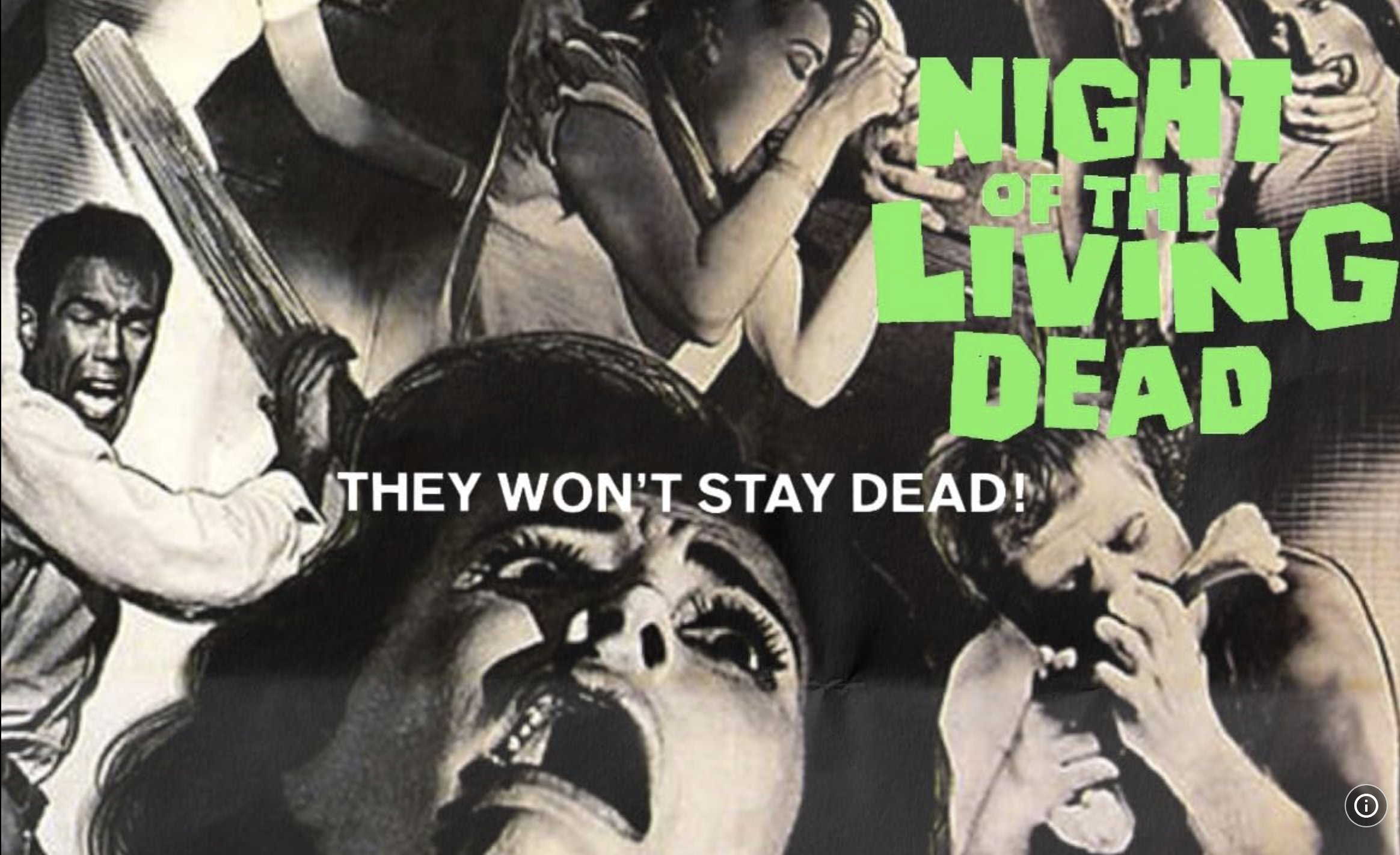
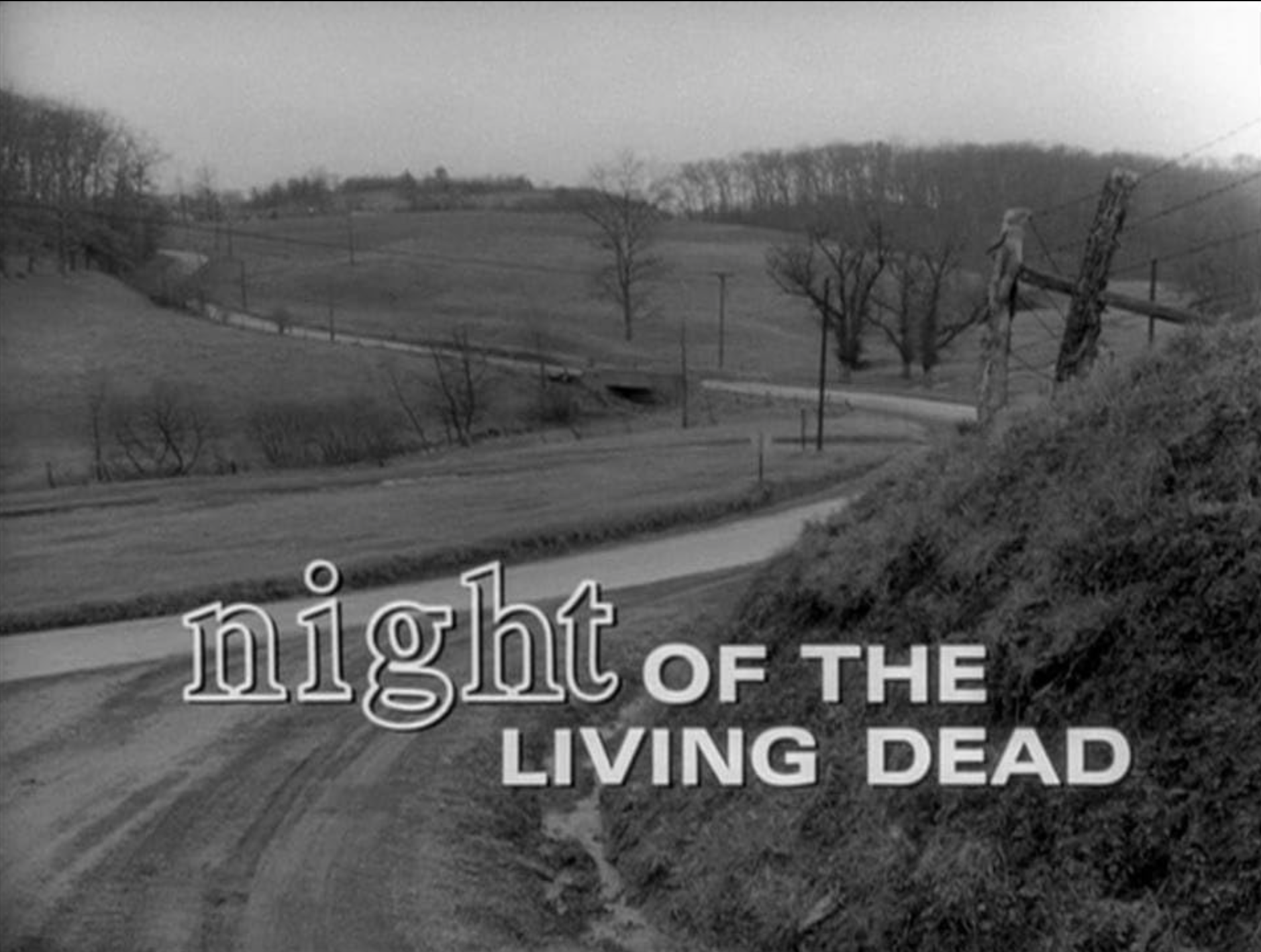
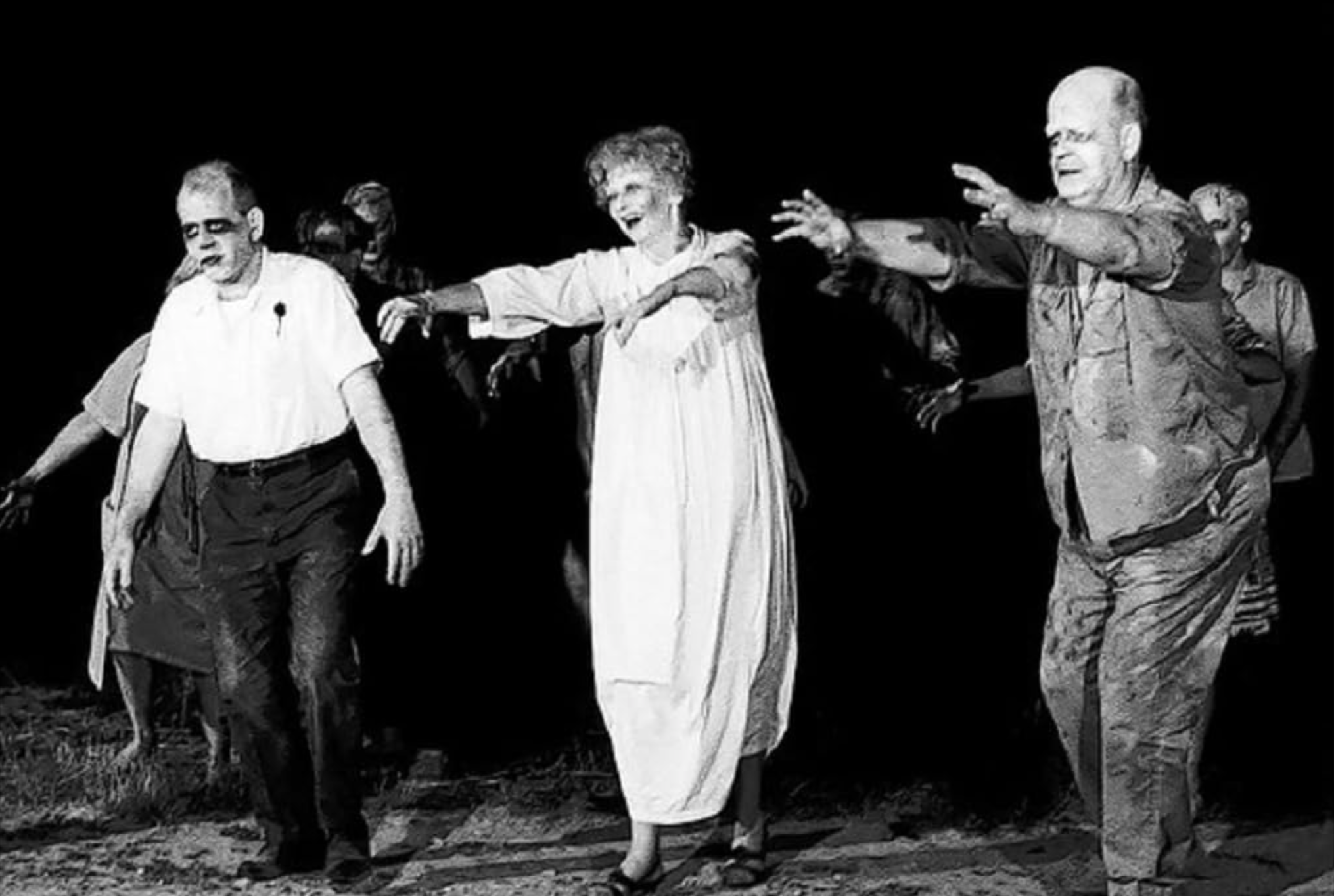
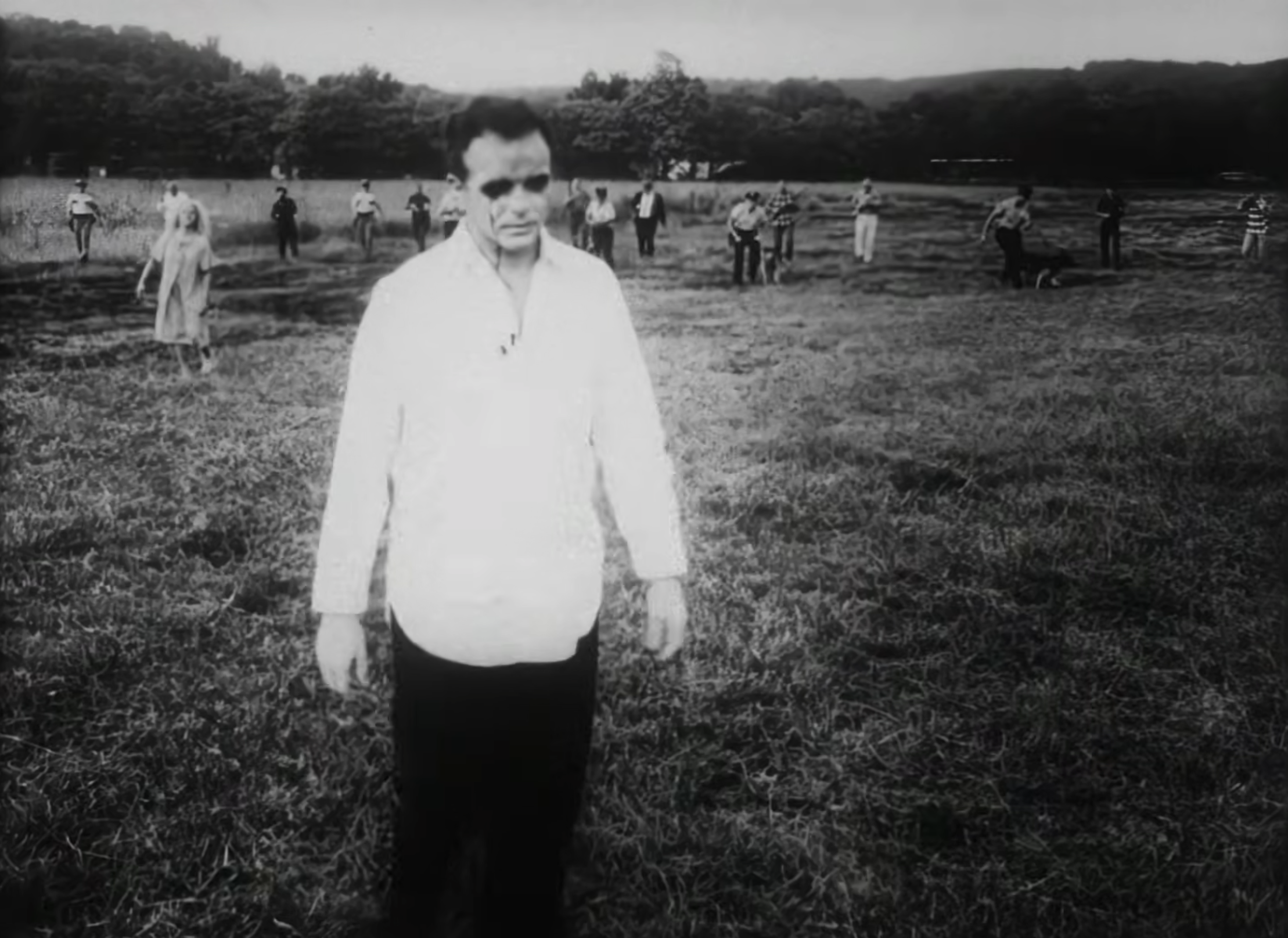
From left to right: Promotional poster, opening title, and two clips from the movie, Night of the Living Dead, 1968.
The film was released by a small production company in Pittsburgh called, The Latent Image. The company was run by George Romero with his partners Rudy Ricci and Russ Streiner. They paid the bills making commercials for companies like Heinz Ketchup. Romero also worked on Mister Rogers Neighborhood, with his first substantial directing credit being for a short film starring Fred Rogers. In the film, Mr. Rogers gets his tonsils out to show children that hospitals are nothing to fear. Please note that the man who taught a generation of kids not to fear the hospital was the same one who taught them how to fear a cemetery.
Romero directed, shot, and edited Night of the Living Dead himself for about ~$114,000 dollars in a farmhouse in western Pennsylvania. The budget was scraped together from friends and investors, the ghouls were neighbors, and the blood was food coloring mixed with chocolate syrup. This amazing zombie classic went on to earn more than $30 million dollars, but for the people who made it, they reaped very little of the financial reward. Say hello to copyright law!
The copyright mistake
This is where the problem began. Before the film was released, the distributor got nervous about the title. The working title was Night of the Flesh Eaters. There was already a 1964 film called The Flesh Eaters, and the distributor, the Walter Reade Organization, wanted to avoid any confusion. They decided late in the game to retitle the picture, Night of the Living Dead and cut a new opening credit sequence to match.
Somewhere in the brilliance of the title change, the copyright notice was removed from the print and never added back on. In the world of copyright, this was a fatal mistake.
At the time, the United States Copyright Act of 1909 required published works to carry a proper notice, meaning the copyright symbol or word plus the year. It was not a formality you could not fix later with an apology or with a filing fee. If a work was published without notice, that work lost federal copyright protection and fell into the public domain. There was no ability to appeal, no grace period, and no second chances.
Upon release of Night of the Living Dead, without that notice, the film was instantly in the public domain, the copyright was retained by no one, and the world could reuse, remix, redistribute, and watch the film to their heart’s content with no permission, license, contract, or payment. One of the most influential horror film of its generation blew through theaters owned by no one.
Romero had very little room for recourse, but did try to sue the distributor. But, by that time, the Walter Reade Organization had declared bankruptcy, dissolved, and there was really no other action the filmmaker could take. Romero proved to be champ, though. In a 2010 interview, he noted that the film gave him a career, a following, and an important place in history. He kept working in the genre he built until his death in 2017.
The legacy of our zombie friends
Over the years, hundreds of home video editions have been released. Geoff Turner, a collector who has spent years cataloguing every release he can find in a project called Night of the Living Tapes, has identified over 250 releases in VHS and Betamax alone, found 650 releases total, and has made a Kickstarter funding his work around this film. Remakes and unofficial sequels have consistently followed and Romero never had the standing to benefit from or stop a single one.
In 1999, the Library of Congress added Night of the Living Dead to the National Film Registry as a work of enduring cultural significance. You can stream it free, violating no ones rights, on almost any platform, or for kicks and giggles, watch the restored release done by The Museum of Modern Art and The Film Foundation (released through Criterion).
thE takeaway
Thankfully, the Copyright Act of 1976 removed the notice requirement, meaning a tragedy like this would not happen today. Nobody loses a copyright over a missing symbol anymore. Although the risk ended in 1976, this change cannot reach back in time and rescue our favorite, little zombie film from 1968.
Even so, the shape of the failure has not changed. Rights can still get lost in the handoff, whether it be a retitle, a change in vendors or suppliers, a rush to hit a launch date, or a contract that was not reviewed because there was pressure to hit a date. Copyright and ownership does not have to get damaged in some dramatic moment. It can disappear or be chipped away at in small operational steps that everyone assumes someone else is handling.
Although Romero got a legend out of his story, most people just get a very hard lesson.
First moral of the story? Check the small stuff, since that small stuff matters. Second moral of the story story? Watch a zombie movie.
Sources
Encyclopedia.com, 1960s: Film and Theater, https://www.encyclopedia.com/history/culture-magazines/1960s-film-and-theater
Historic Newspapers, A Year in History: 1968 Timeline, https://www.historic-newspapers.com/blogs/article/1968-timeline
Horror News, Film Review: Night of the Living Dead (1968), https://horrornews.net/5607/film-review-night-of-the-living-dead-1968/
Image Ten, Inc., Night of the Living Tapes, https://www.kickstarter.com/projects/notld1968/night-of-the-living-tapes
IMDb, Night of the Living Dead, https://www.imdb.com/title/tt0063350/
Carnegie Mellon University Libraries, Legacy of the Dead: An Introduction, (2017), https://www.library.cmu.edu/about/news/2017-10/legacy-dead-introduction
Osgoode Hall Law School, York University, Public Domain of the Living Dead, (2021), https://www.yorku.ca/osgoode/iposgoode/2021/09/30/public-domain-of-the-living-dead/